Neuro Fortis PRO Ingredients: What's Really on the Label
The marketing copy around Neuro Fortis PRO is duplicated across dozens of lookalike sites, and it doesn't always agree with itself. Here's how to cut through that and check what you're actually taking.
Why Ingredient Claims Vary So Much for This Product
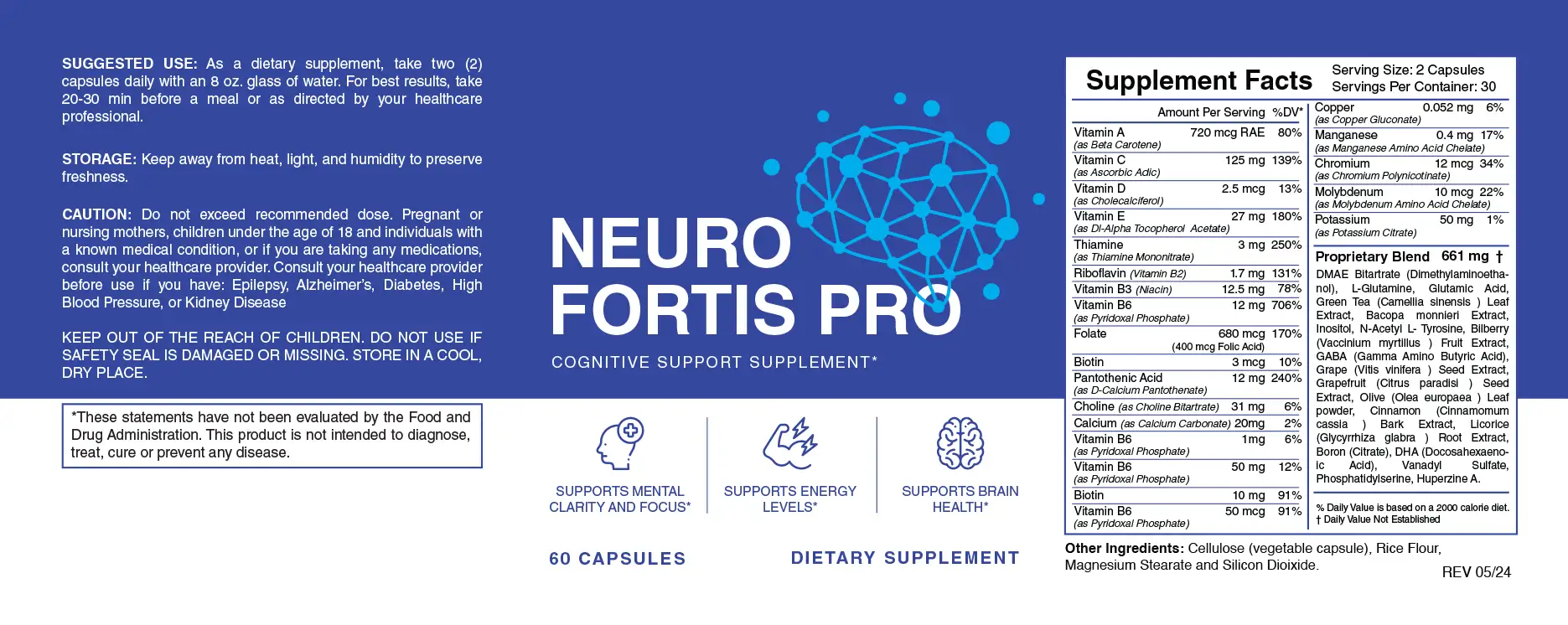
If you search around for "Neuro Fortis PRO ingredients," you'll run into a long list of near-identical review and reseller sites, each naming a slightly different set of compounds — some mention Bacopa monnieri and Ginkgo biloba, others add Alpha-GPC, Huperzine A, Rhodiola Rosea or Lion's Mane. That inconsistency isn't a good sign about the quality of information circulating around this offer, and it's exactly why we'd rather teach you how to check the label yourself than repeat any one of those lists as fact.
How to Read a Supplement Facts Panel Like This One
When your bottle arrives (or before you buy, if a retailer photo shows the label clearly), check for:
- The active ingredient list and per-capsule amounts — not just ingredient names, but the actual milligram dose of each one.
- "Other/Inactive ingredients" — typically fillers and capsule material, such as microcrystalline cellulose, magnesium stearate, gelatin, and silica dioxide.
- Manufacturing and facility claims — the official offer page states the product is manufactured in a US-based, FDA-registered facility following Good Manufacturing Practice (GMP) standards. That's a claim about where and how it's made, not a claim about clinical efficacy, and it's worth knowing the difference.
- Allergen statements — check for anything relevant to your own allergies or sensitivities, since third-party marketing pages rarely list this accurately.
The Ingredient Category, in Plain Terms
Regardless of the exact final blend on your bottle, Neuro Fortis PRO sits in a well-established supplement category sometimes called "nootropic" or "cognitive support" formulas. These products typically combine some mix of:
- Plant extracts (commonly Bacopa monnieri, Ginkgo biloba, or Rhodiola Rosea in this category) — traditionally used for memory and stress support, with a mixed body of clinical research behind them depending on the specific extract and dose.
- Phospholipids like phosphatidylserine, a compound found naturally in cell membranes, sometimes included at supplement doses for brain-cell-membrane support.
- B-vitamins such as B12 and B3 (niacin), which support normal nervous-system function and energy metabolism.
- Amino-acid-derived compounds like L-theanine or taurine, sometimes included for a calming, non-jittery focus effect.
None of this is a substitute for checking your own bottle's actual panel, and none of it is a claim that Neuro Fortis PRO specifically treats or prevents any condition — supplement ingredients in this category are generally studied for general support, not disease treatment, and the FDA has not evaluated the product's marketing claims.
Questions to Ask Before You Take It
- Do I take any prescription medication that could interact with a stimulant-free nootropic blend? (Check with a pharmacist — this is quick and free at most pharmacies.)
- Am I pregnant, nursing, or managing a diagnosed health condition? If so, talk to your doctor before starting anything new.
- Am I comfortable with the full ingredient list on my specific bottle, including inactive ingredients and allergens?
Learn More About Brain Health From a Non-Commercial Source
For general, research-based information on cognitive health as people age — independent of any supplement brand — the National Institute on Aging maintains a plain-language overview worth reading before you evaluate any product in this category: Cognitive Health and Older Adults (NIA.NIH.gov).
Affiliate link — we may earn a commission if you purchase. See our disclosure.